
Common Mistakes to Avoid When Applying for Scholarships in 2026
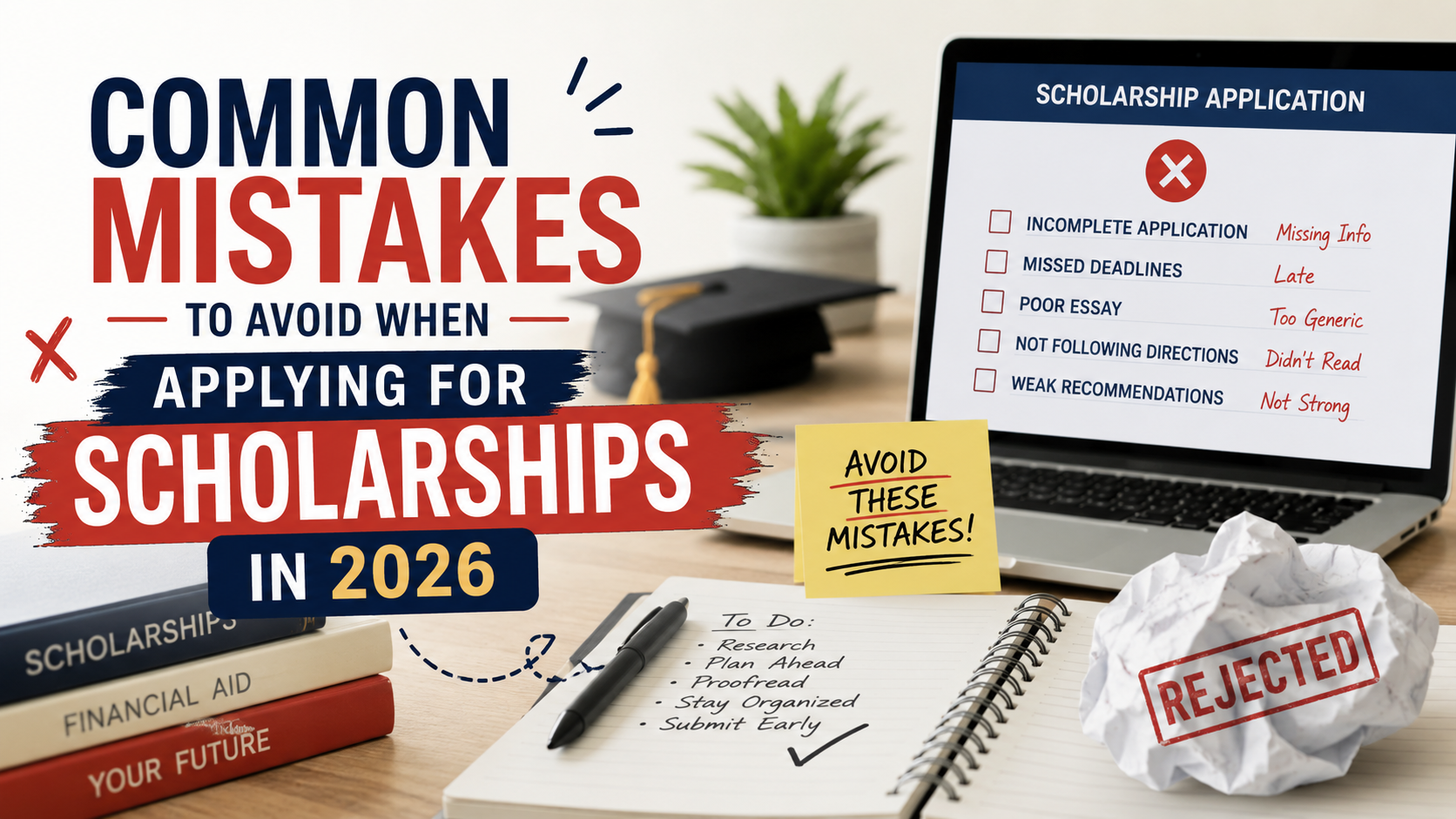
Common Mistakes to Avoid When Applying for Scholarships in 2026: Every year, thousands of qualified students miss out on scholarship funding not because they weren’t good enough, but because of mistakes that could have been easily avoided. A poorly timed submission, a generic essay, or a missing document can quietly disqualify an otherwise strong application before a committee even reads a single word about you.
The scholarship landscape in 2026 is more competitive than ever. More students are applying, committees are more selective, and the margin for error is slim. But here is the thing most of the mistakes that sink applications are not complicated. They are the kind of things that happen when students rush, overlook details, or simply don’t know better.
This article provides a break down for the most common scholarship application mistakes and what you can do to avoid each one. Whether you are applying for your first scholarship or your tenth, these insights will help you put your best foot forward.
Common Mistakes to Avoid When Applying for Scholarships in 2026
Below are the common mistakes or pitfalls to avoid when applying for scholarship in 2026:
1. Starting the Search Too Late
This is perhaps the most widespread mistake, and it quietly affects more students than any other error on this list. Many applicants begin looking for scholarships a few weeks before a deadline by which point, several opportunities have already closed.
Scholarship deadlines are spread throughout the year, and many of the most competitive awards open applications months in advance. Starting your search late means you are already working against yourself before you have even begun.
The fix is straightforward: begin your scholarship search at least six to nine months before you need the funding. Create a running list of scholarships you are eligible for, note their deadlines, and build a calendar around those dates. Setting reminders on your phone is a small habit that can make a significant difference.
2. Ignoring the Deadline
Closely tied to starting late is the act of actually missing a submission deadline. In the scholarship world, a missed deadline almost always means automatic disqualification no exceptions, no extensions, no appeals.
What makes this mistake so frustrating is how preventable it is. Students often underestimate how long the application process takes, especially when essays, recommendation letters, and supporting documents are involved. They leave everything to the last day and end up rushing or worse, submitting after the cutoff.
A practical strategy is to set your own personal deadline at least three to five days before the actual submission date. This buffer gives you time to review your work, gather any missing items, and handle unexpected problems without panic.
3. Ignoring the Application Guidelines
Every scholarship has its own set of rules. Some require essays of a specific word count. Others ask for documents in a particular format. Some specify how the application should be submitted whether by email, an online portal, or physical mail. Ignoring these instructions, even partially, can lead to disqualification regardless of how impressive your application is.
This mistake often happens because students reuse applications across multiple scholarships without carefully reading each one’s requirements. What works for one scholarship may violate the guidelines of another.
Before you begin any application, read the instructions thoroughly from top to bottom. Create a checklist for each scholarship that includes every requirement essay word limit, required documents, format specifications, and submission method. Tick each box only when it is done.
4. Not Studying Past Questions
Irrespective of the scholarship you applied for, practicing the relevant scholarship past questions could be pretty much helpful because it opens you up to the examination format, question pattern and what to expect generally.
5. Submitting a Generic Essay
A scholarship essay is not a formality. It is the most personal part of your application and, in many cases, the deciding factor between two candidates with similar academic profiles. Yet one of the most common mistakes applicants make is submitting a one-size-fits-all essay that could apply to any scholarship from any organization.
Committees read hundreds of essays. They can immediately spot a generic submission one that does not speak to the specific mission of their award, does not include any personal story, and reads like it was written in thirty minutes.
Every essay you write should be tailored to the specific scholarship you are applying for. Research the awarding organization. Understand what they value whether that is leadership, community service, innovation, or academic excellence and write an essay that speaks directly to those values. Connect your personal story to their mission. Make the reader feel like you were made for this specific award.
6. Failure to Review
Spelling errors, grammatical mistakes, and unclear sentences might seem minor, but they send a clear message to a scholarship committee: this applicant was not careful enough to review their own work. In a competitive field, that impression can cost you the award.
Proofreading your own work is necessary, but it is not always enough. When you have read something multiple times, your brain starts filling in what it expects to see rather than what is actually on the page. This is why errors slip through even after several personal reviews.
The best approach is to ask someone else a teacher, mentor, friend, or family member to read your application with fresh eyes. Read your essay out loud as well. It is surprisingly effective at catching awkward phrasing and sentences that don’t flow naturally.
7. Incomplete Application
An incomplete application is one of the fastest ways to get disqualified. If a section of the application does not seem to apply to you, the temptation might be to leave it empty. That is a mistake. Blank sections signal carelessness and may lead reviewers to assume you did not bother to complete the form properly.
If a section genuinely does not apply to your situation, write “N/A” or “Not applicable.” This small action tells the committee that you saw the section, considered it, and responded accordingly. It reflects attention to detail a quality every scholarship committee appreciates.
8. Applying Without Checking Eligibility
It might sound basic or impossible, but many students waste valuable time applying for scholarships they do not actually qualify for. Some scholarships are restricted by nationality, field of study, academic level, income, gender, or residency. Applying without confirming your eligibility leads to automatic rejection and takes time away from applications where you genuinely stand a chance.
Before investing hours into an application of a particular scholarship, carefully read the eligibility requirements. Make sure you tick every box before you begin. Applying smart is always more effective than applying to everything in sight.
9. Applying to Too Many or Too Few Scholarships
There is a balance to strike when it comes to the number of scholarships you apply for. Applying to too few limits your chances significantly. Applying to too many means you spread yourself thin and end up with a stack of mediocre, rushed applications rather than a smaller number of well-crafted ones.
The ideal approach is quality over quantity with strategic volume. Apply to as many scholarships as you can manage without compromising the quality of each application. A focused, personalized application to ten well-matched scholarships will outperform fifty generic submissions every single time.
10. Falling Prey to Scholarship Scams
In 2026, scholarship scams are unfortunately still very much alive. Fraudulent websites and fake scholarship listings prey on students who are desperate for funding. One of the most common red flags include scholarships that require a payment to apply, awards that “guarantee” you will win, or applications that ask for sensitive personal information like bank details or national identification numbers.
Legitimate scholarships never ask you to pay to apply. Always verify a scholarship through official channels the awarding institution’s website, a trusted scholarship database, or your school’s financial aid office. If something feels off, trust your instincts and walk away.
11. Not Following Up After Submission
Many students treat the submission as the finish line. They click send and forget about it. But scholarship applications sometimes require follow-up the committee may reach out to confirm documents, schedule an interview, or request clarification on something in your application.
If you do not check your email regularly after submitting, you might miss a critical message. Some committees interpret a lack of response as a withdrawal of your application. Make a habit of checking your inbox including your spam folder in the weeks after each submission.
Final Thoughts
Winning a scholarship in 2026 requires more than strong grades and a compelling story. It requires discipline, attention to detail, and a genuine effort to meet every requirement the awarding body has set. The good news is that most of the mistakes covered in this article are entirely within your control.
Start early. Follow the instructions. Write essays that are specific and personal. Proofread relentlessly. Choose recommenders who actually know your work. And keep your eyes open for the follow-up communication that could change everything.